I work at home, and if I wanted to, I could have a computer right by my bed, and I’d never have to leave it. But I use a typewriter, and afterward I mark up the pages with a pencil. Then I call up this woman named Carol out in Woodstock and say, “Are you still doing typing?” Sure she is, and her husband is trying to track bluebirds out there and not having much luck, and so we chitchat back and forth, and I say, “Okay, I’ll send you the pages.”
Then I go down the steps and my wife calls, “Where are you going?” “Well,” I say, “I’m going to buy an envelope.” And she says, “You’re not a poor man. Why don’t you buy a thousand envelopes? They’ll deliver them, and you can put them in the closet.” And I say, “Hush.”
So I go to this newsstand across the street where they sell magazines and lottery tickets and stationery. I have to get in line because there are people buying candy and all that sort of thing, and I talk to them. The woman behind the counter has a jewel between her eyes, and when it’s my turn, I ask her if there have been any big winners lately.
I get my envelope and seal it up and go to the postal convenience center down the block at the corner of Forty-seventh Street and Second Avenue, where I’m secretly in love with the woman behind the counter. I keep absolutely poker-faced; I never let her know how I feel about her. One time I had my pocket picked in there and got to meet a cop and tell him about it.
Anyway, I address the envelope to Carol in Woodstock. I stamp the envelope and mail it in a mailbox in front of the post office, and I go home.
And I’ve had a hell of a good time. I tell you, we are here on Earth to fart around, and don’t let anybody tell you any different.
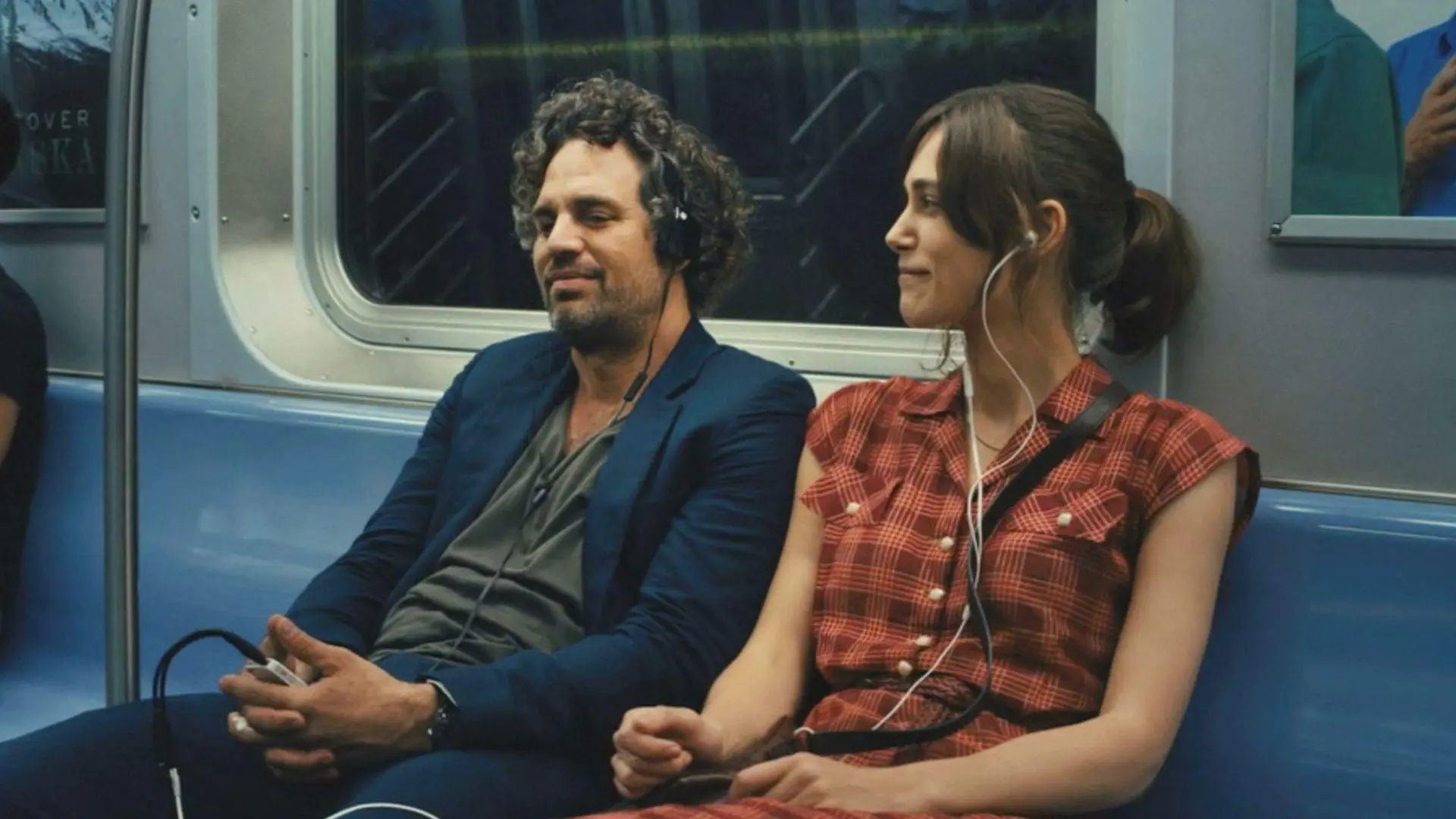
Dan: That’s what I love about music. Gretta: What? Dan: One of the most banal scenes is suddenly invested with so much meaning, you know? All these banalities, they’re suddenly turned into these… these beautiful, effervescent pearls. From music. Dan: I’ve got to say, as I’ve gotten older, these pearls are just… becoming increasingly more and more rare to me. Gretta: More string than pearls? Dan: Yeah. You’ve got to travel over a lot more string to get to the pearls. This moment is a pearl, Gretta. Gretta: It sort of is, isn’t it? Dan: All this has been a pearl.
The questions we choose to ask shape lives. Why is this the way it is? Can’t we change it? Can we do better? Can we be better? How do we want to be remembered? All the things I’ve done in my silly little career. The most simple? And most difficult? That most important thing I’ve done and continue to do is choose to ask the questions.
I enjoy personal writing where you can almost witness the author working through something so articulately. Being able to point and gesture at what that felt experience at this moment of uncertainty looks like for them.
What am I trying to unstick, exactly? It’s not that I don’t have creative ideas. I have lots of ideas. My ideas have ideas. They’re just not manifesting themselves into existence. Whenever I have time and space to actually act on a creative idea, I either forget what the brilliant idea was thanks to brain fog, or, if I do remember what it was, it suddenly feels stupid or like I can’t do it and I don’t want to work on it anymore. Or I get distracted by some other thing that seems more urgent and important but in the grand scheme of things probably isn’t. Or I just don’t have the energy. And then before I know it, months have passed and I feel guilty that I haven’t made anything.
Rooting for you to get unstuck, internet neighbor. May the new space be a path back to finding play and bringing your creative ideas to life.
In Humans Are Amazing, Chris Krycho reflects on watching his daughters go from never having skied to being completely comfortable on the slopes. It’s fascinating, and as someone who learned to ski as an adult, reading his recap brought back some memories. I especially love the spirit of working through the difficulty—that effortful engagement to keep at it until things finally click. While it is a bit easier when we are young, remaining open to this kind of growth as we age is a mindset we should do our best to nurture.
Human beings are amazing creatures. “You never forget how to ride a bike” is a truism that we think little of, when in fact it should stun us. We should marvel more at what we can do — at how quickly and well we can learn new things, and at how we can remember them at the remove of even decades.
The author reflects on how he’s not skied in so long but was able to pick things up quickly as well. At the start of every season, I always have a fleeting moment of doubt where I’m convinced I’ve forgotten how to do it and that my legs just won’t cooperate. But I start off easy, and before long, muscle memory takes over and I’m right back to enjoying the joy of being on the slopes.
Quotes from Valery Legasov’s character in HBO’s miniseries Chernobyl (2019). An apt reminder for our current times, lies have a price.
Episode 1
What is the cost of lies? It’s not that we’ll mistake them for the truth. The real danger is that if we hear enough lies, then we no longer recognize the truth at all. What can we do then? What else is left to abandon even the hope of truth and content ourselves instead with stories? In these stories, it doesn’t matter who the heroes are. All we want to know is: “Who is to blame?” In this story, it was Anatoly Dyatlov. He was the best choice. An arrogant, unpleasant man, he ran the room that night, he gave the orders… and no friends. Or at least, not important ones. And now Dyatlov will spend the next ten years in a prison labor camp. Of course, that sentence is doubly unfair. There were far greater criminals than him at work. And as for what Dyatlov did do, the man doesn’t deserve prison. He deserves death.
Episode 5
I’ve already trod on dangerous ground. We’re on dangerous ground right now, because of our secrets and our lies. They’re practically what define us. When the truth offends, we – we lie and lie until we can no longer remember it is even there. But it is… still there. Every lie we tell incurs a debt to the truth. Sooner or later, that debt is paid. That is how…an RBMK reactor core explodes: Lies.
“Sometimes magic is just someone spending more time on something than anyone else might reasonably expect.” Teller spends years on a trick. Shadows he has done since he was 18. He spent years perfecting these tricks, and that’s how you get the payoff: To get great at these things takes time. You see someone do something amazing, and you think it’s magic. But really it’s the product of hard work and study and all these important things.
This rings true for so many things touched by deep attention.
My partner’s family, for example, thinks a lot about food. One of their favorite podcasts is Off Menu, where guests are invited to share their dream menu. A lot of the conversation is around meals: favorite food memories, what to eat throughout the week, how to pair different flavors. I often feel out of my depth to fully engage but I admire the time and thought they put into it.
It shows in the meals we share: whether it’s a perfectly curated takeout order that lets us try everything, a quiet Tuesday night dinner, or their disappointment when something doesn’t quite hit the mark (even if I think it’s fine). The magic is unmistakably there. You can always feel the labor of love.
This magic is everywhere. All of these are often the result of “someone spending more time on something than anyone else might reasonably expect.” John Collison put it eloquently:
As you become an adult, you realize that things around you weren’t just always there; people made them happen. But only recently have I started to internalize how much tenacity everything requires. That hotel, that park, that railway. The world is a museum of passion projects.
It’s an important reminder when I’m feeling insecure or inadequate. To properly assign the weight of my time and effort. And when I’m somewhere things go smoothly, it’s worth remembering that someone likely put in quiet, intentional effort to make that happen. The success of a party, a good road trip, a clean section of the block, a dog park that functions or even a friendship often rests on someone behind the scenes putting in the time and care.
More importantly, it’s a question worth reflecting on regularly: What is worth “spending more time on than anyone might reasonably expect”?
The answers can help me prioritize what I truly care about. Whatever I choose, I should try to make sure my attention and time reflect alignment with those priorities.
In Remarks on AI from NZ, Neal Stephenson captures something I’ve been grappling with as my use for various LLMs increase: a sense that leveraging AI for certain tasks can rob us of the opportunity to learn.
Speaking of the effects of technology on individuals and society as a whole, Marshall McLuhan wrote that every augmentation is also an amputation. […] Today, quite suddenly, billions of people have access to AI systems that provide augmentations, and inflict amputations, far more substantial than anything McLuhan could have imagined. This is the main thing I worry about currently as far as AI is concerned. I follow conversations among professional educators who all report the same phenomenon, which is that their students use ChatGPT for everything, and in consequence learn nothing.
The post also reflects on other forms of intelligence from a perspective that was new to me.
In Calculators & Writing, Chris Coyer points to something that’s been lingering in the back of my mind when using AI for certain tasks. My partner actually brought this up to me a while ago, and at the time I thought they were wrong – but I’ve now changed my mind. The quote below gets to the heart of it:
… with writing, humans are thinking, feeling, and communicating. Computers do not do these things.
Using AI to write means you’re robbed of the thinking and feeling it takes to write, which is (most?) of the value. Communicating, I suppose, you’re doing either way, you’re just communicating something you didn’t think about or feel if your writing is generated, which is fucked.
Despite remarkable progress in AI, some tasks still demand our effortful engagement. Learning, for example, requires one “to make eye contact with the idea” because the value lies in the effort, not just the outcome.